Where 2048 Came From: Threes!, 1024 and a Weekend in 2014
Published · 3 min read
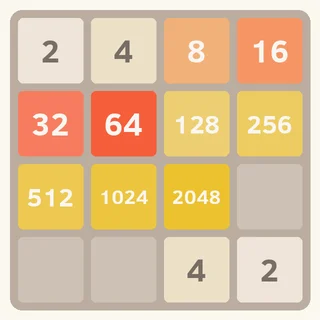
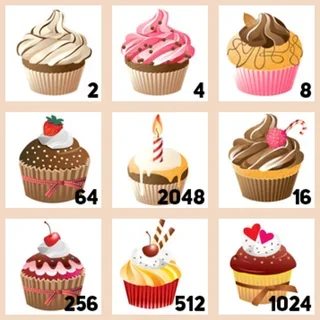
Few games have spread as fast as 2048. In the spring of 2014 it was suddenly on every phone and school computer, copied into hundreds of versions with cats, cupcakes and memes on the tiles. The original is still a small web page with sixteen squares. Here is how it came about.
First there was Threes!
In February 2014, a small team led by designer Asher Vollmer and artist Greg Wohlwend released Threes! for the iPhone. It used a 4x4 board and sliding tiles, but with its own rules: a 1 and a 2 combine into a 3, and from then on equal numbers combine — two 3s into a 6, two 6s into a 12. The tiles had faces and voices, and the game was carefully balanced over many months of development. It was a hit, and it was a paid app.
Then 1024
Within weeks, a free game called 1024 appeared from Veewo Studio. It simplified the idea: start from 1s and 2s, combine equal numbers, aim for 1024. Other clones followed quickly. The sliding-merge board was clearly catching on.
A weekend project
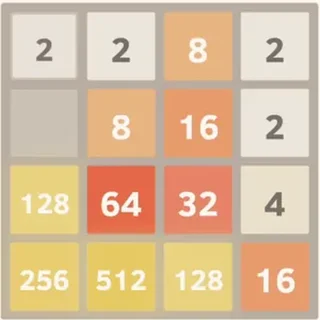
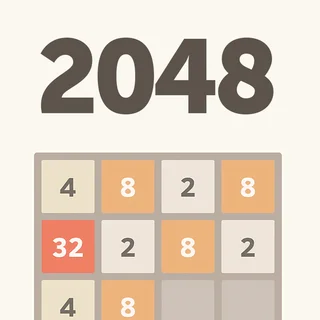
Gabriele Cirulli, a young Italian web developer, played 1024 and wondered whether he could make his own version for the browser over a weekend. He changed the start to 2s and 4s, set the goal at 2048, gave the tiles a warm beige and orange colour scheme and put it online in March 2014, with a note on the page: based on 1024 by Veewo Studio and conceptually similar to Threes by Asher Vollmer.
He also published the code on GitHub under the MIT licence, which lets anyone copy, change and share it. That decision shaped everything that came next.
Why it spread
- It was free and ran in any browser. No app store, no install. A link was enough.
- It explained itself. One line of instructions and the first move teaches you the rest.
- It was short and endless at once. A game takes minutes, but beating it takes skill.
- Anyone could remix it. With the code open, people swapped the numbers for pictures, changed the board size and added undo buttons. Each copy sent new players back to the idea.
Within days, millions of people had played it. Many of the versions people still play — 2048 Cupcakes, 2048 Doge, the fruit and ball variants on this site's games page — are built on that same open code or copy its rules exactly.
The debate
Not everyone was happy. The makers of Threes! wrote about how it felt to spend over a year on a careful design and then watch a free copy overtake it in weeks. Many players who later tried Threes! found it the deeper game, with tighter rules and more room for strategy. The story is still told as an example of how quickly ideas move on the internet, and how hard it is to own a game mechanic.
Why the original still holds up
The 2014 code is tiny, fast and fair. It has no ads inside the game, no timers, no power-ups and no undo — just the board, a score and a best score. Every new tile is a 2 nine times out of ten and a 4 the rest of the time, and that is all the randomness there is. It also quietly saves both your best score and the game you were in the middle of, so a closed tab costs you nothing.
That is the version on the front page of this site, credited to Gabriele Cirulli as the licence asks. If you have only ever played the remixes, it is worth a game or two on the one that started them.
More from the blog
- The Maths of 2048: Scores, Odds and How Many Moves It Takes
Why a 2048 tile is worth about 20,000 points, how often a 4 appears, roughly how many moves a win takes and what the biggest possible tile is.